

Refresh Tired or Aging Eyes While Preserving Your Natural Expression
The eyes are often one of the first areas of the face to show visible aging. Loose upper eyelid skin can make the eyes appear heavy or tired, while under-eye bags, puffiness, and lower eyelid changes can create a fatigued appearance even when you feel rested.
Eyelid surgery or blepharoplasty at Dr. Demetri’s facial plastic surgery clinic in Tampa, FL, can address these changes by carefully removing or repositioning excess skin and fat around the upper eyelids, lower eyelids, or both. The goal is not to change the character of your eyes, but to create a more rested, refreshed appearance that remains natural to your face.
As a double board-certified facial plastic and reconstructive surgeon, Dr. Demetri Arnaoutakis specializes in procedures of the face and neck. His approach to eyelid surgery begins with understanding the anatomy contributing to each patient’s concerns so that treatment can be tailored to the upper eyelids, lower eyelids, surrounding facial structures, or a combination of areas.
Before & After — Eyelid Surgery
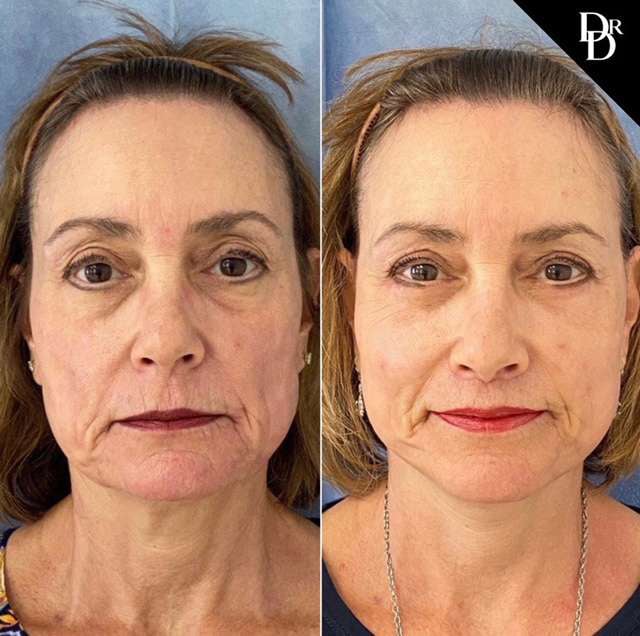
What Is Eyelid Surgery?
Blepharoplasty is a facial plastic surgery procedure designed to improve age-related or inherited concerns affecting the upper or lower eyelids.
Depending on your anatomy, eyelid surgery may address:
- Loose or excess upper eyelid skin
- Upper eyelid heaviness
- Bulging or prominent eyelid fat
- Under-eye bags or puffiness
- Excess or crepey lower eyelid skin
- Changes that make the eyes appear chronically tired
- Asymmetry between the eyelids
Upper and lower eyelid surgery address different anatomical concerns and require different surgical approaches. Some patients benefit from treatment of one area, while others choose combined upper and lower blepharoplasty for more comprehensive rejuvenation.
What Causes the Eyes to Look Tired or Older?
The appearance of the eyelids is influenced by more than skin alone. With age, the delicate eyelid skin can lose elasticity and begin to fold or sag. The tissues supporting fat around the eye may also change, allowing fat to become more prominent and contributing to under-eye bags or upper eyelid fullness.
Genetics matter as well. Some people develop heavy upper lids or prominent under-eye bags relatively early in adulthood, even when the rest of the face shows few signs of aging.
Other facial structures can influence the appearance of the eyes. A descending brow, for example, can contribute to heaviness above the upper eyelids. Lower eyelid appearance can be affected by the relationship between the eyelid, cheek, skin, and underlying fat.
This is why determining what is actually causing the concern is an important part of planning eyelid surgery.
Who May Benefit From Blepharoplasty?
There is no single “right age” for eyelid surgery. Candidacy depends more on your anatomy and concerns than the number of birthdays you have celebrated.
You may be a candidate if you:
- Have loose upper eyelid skin that makes your eyes appear heavy
- Feel that your eyes make you look tired even when you are well rested
- Have persistent under-eye bags or puffiness
- Have excess or wrinkled lower eyelid skin
- Have inherited eyelid characteristics you would like to change
- Want to refresh the eye area without dramatically changing your appearance
- Are in appropriate health for elective surgery
- Have realistic expectations for the procedure
Certain eye conditions and medical concerns may affect whether blepharoplasty is appropriate. Dr. Demetri will review your health and eye history as part of your evaluation.
Why Choose Dr. Demetri for Eyelid Surgery in Tampa?
Eyelid surgery involves one of the most anatomically delicate and visually expressive areas of the face. Small changes can have a noticeable effect, making surgical judgment and an understanding of facial anatomy particularly important.
Dr. Demetri is a double board-certified facial plastic and reconstructive surgeon whose surgical practice focuses on the face and neck. His specialized training gives him an understanding not only of eyelid anatomy, but also of how the brows, cheeks, and surrounding facial structures influence the appearance of the eyes.
His approach to blepharoplasty emphasizes:
- Specialized training in facial plastic and reconstructive surgery
- Double board certification
- Detailed evaluation of upper and lower eyelid anatomy
- Consideration of brow position and surrounding facial structures
- Individualized surgical planning
- Conservative, precise tissue removal and repositioning
- Attention to eyelid symmetry and proportion
- Natural-looking rejuvenation that preserves facial identity and expression
- Accredited in-office surgical suite with board certified anesthesia care
Rather than approaching every tired-looking eye as an excess-skin problem, Dr. Demetri determines which anatomical structures are actually contributing to the concern before recommending surgery. Explore our Gallery of results and view patient Testimonials to learn more about patient experiences with Dr. Demetri.
What Does Dr. Demetri Evaluate During an Eyelid Surgery Consultation?
Your consultation is an important diagnostic part of eyelid surgery.
Dr. Demetri will listen to what bothers you about your eyes and examine the upper and lower eyelids in relation to the rest of your face.
Depending on your concerns, he may evaluate:
- The amount and distribution of upper eyelid skin
- Upper eyelid fullness or prominent fat
- Brow position
- Natural eyelid crease and shape
- Lower eyelid skin quality
- Under-eye bags and fat distribution
- Lower eyelid position and support
- The transition between the lower eyelid and cheek
- Differences between the right and left eyes
- Previous eyelid or facial procedures
- History of dry eye or other relevant eye conditions
This evaluation helps determine whether your concerns are best treated with upper blepharoplasty, lower blepharoplasty, another facial procedure, or a combination of approaches.

How Does Dr. Demetri Create Natural-Looking Eyelid Surgery Results?
Successful eyelid surgery is not about removing as much skin or fat as possible.
Overcorrection can make the eyes appear hollow, tight, or noticeably operated on. Dr. Demetri instead focuses on addressing the tissues responsible for the patient’s concerns while preserving the characteristics that give the eyes their natural shape and expression.
For upper eyelid surgery, this may mean carefully determining how much skin can be removed while maintaining appropriate eyelid function and closure. For lower eyelid surgery, treatment may involve removing or repositioning prominent fat and addressing excess skin according to the patient’s anatomy rather than simply removing all visible fullness beneath the eye.
The objective is a refreshed appearance that fits naturally with the rest of the face—not a different set of eyes.
What Is Upper Eyelid Surgery?
Upper blepharoplasty primarily addresses excess skin and, when appropriate, prominent fat affecting the upper eyelids.
During surgery, Dr. Demetri places the incision within the natural upper eyelid crease so that the resulting scar can become less noticeable as it heals. Excess skin is carefully removed, and underlying tissue or fat can be addressed when appropriate.
Upper eyelid surgery can create a cleaner, more open appearance while preserving the patient’s natural eye shape. Some patients who believe their upper eyelids are the primary concern actually have brow descent contributing to the heaviness. Identifying that distinction before surgery helps avoid removing eyelid skin when the brow is an important part of the problem.
What Is Lower Eyelid Surgery?
Lower blepharoplasty addresses concerns such as persistent under-eye bags, prominent fat, and excess lower eyelid skin. The appropriate technique depends on what is causing the under-eye concern. In some patients, prominent fat may be removed or repositioned to create a smoother contour. Others may also benefit from treatment of loose lower eyelid skin.
Because the lower eyelid must maintain its natural position against the eye, careful evaluation of eyelid support and surrounding anatomy is particularly important. Dr. Demetri tailors lower eyelid surgery to the individual rather than treating every under-eye bag with the same technique.
Can Upper and Lower Blepharoplasty Be Performed Together?
Yes. Upper and lower eyelid surgery can often be performed during the same operation when aging or inherited characteristics affect both areas.
Combining the procedures can create more balanced rejuvenation around the entire eye while allowing recovery from both areas to occur at the same time.
However, treating both eyelids is not automatically better. If your concerns are isolated primarily to the upper or lower eyelids, Dr. Demetri may recommend treating only the area that would meaningfully benefit from surgery.

Do I Need Eyelid Surgery or a Brow Lift?
Upper eyelid heaviness does not always originate entirely from the eyelid.
As the brow descends with age, tissue can shift downward and contribute to fullness or hooding above the eyes. Removing upper eyelid skin alone cannot correct a significantly descended brow. During your consultation, Dr. Demetri evaluates both the eyelids and brow position to determine where the heaviness originates.
Patients with true excess upper eyelid skin may benefit from blepharoplasty, while those with significant brow descent may be better candidates for a brow lift. Some patients have both concerns and may benefit from combining the procedures. The distinction is important because treating the correct anatomy generally creates a more balanced and natural result.
What Happens During Eyelid Surgery?
Dr. Demetri performs eyelid surgery with light sedation and local anesthesia in his fully accredited surgical suite. The details of blepharoplasty depend on whether the upper eyelids, lower eyelids, or both are being treated. Dr. Demetri uses carefully planned incisions positioned to minimize their visibility whenever possible. Through these incisions, excess skin can be removed and fat or other tissues can be conservatively removed or repositioned according to the surgical plan.
The incisions are then meticulously closed. Before surgery, Dr. Demetri will explain the specific technique he recommends, where incisions will be located, and which tissues will be addressed.
What Is Recovery Like After Eyelid Surgery?
Swelling and bruising around the eyes are expected during the initial recovery period. The eyelids may also temporarily feel tight, tender, dry, or sensitive. Cold compresses, keeping the head elevated, and following Dr. Demetri’s postoperative instructions can help manage early swelling and discomfort.
Bruising and swelling generally become less noticeable as healing progresses. Many patients feel comfortable returning to work and social activities once the most visible signs of surgery have subsided, although the exact timeline varies.
Exercise and strenuous activity are restricted during the early healing period. Contact lenses and eye makeup may also need to be temporarily avoided. Incisions continue to mature over time, and residual swelling can gradually resolve for weeks to months. Dr. Demetri will monitor your healing during postoperative visits and advise you when activities can safely be resumed.
How Long Do Eyelid Surgery Results Last?
Blepharoplasty can create long-lasting improvement, but it does not stop the natural aging process. Upper eyelid skin removed during surgery does not simply grow back, and correction of lower eyelid bags can remain apparent for many years. However, skin, brows, cheeks, and other facial tissues continue to change with age.
Genetics, sun exposure, skin quality, lifestyle, and natural facial aging can all influence how the eye area changes over time.
Can Eyelid Surgery Be Combined With a Facelift or Other Facial Procedures?
Yes. Eyelid surgery can be performed alone or combined with other facial procedures when aging affects multiple areas of the face. For patients with more extensive facial aging, blepharoplasty may be combined with a facelift to address different but complementary concerns.
Eyelid surgery focuses on excess skin, prominent fat, and other changes around the eyes, while facelift surgery can address descended tissues and laxity affecting the cheeks, jawline, and neck. When appropriate, treating these areas together can create more balanced rejuvenation across the face.
A brow lift may also complement upper eyelid surgery when brow descent contributes to heaviness around the eyes. Dr. Demetri evaluates the eyelids in the context of the entire face and will recommend combining procedures only when doing so meaningfully addresses the patient’s anatomy and rejuvenation goals.
How Much Does Eyelid Surgery Cost in Tampa?
The cost of eyelid surgery depends on the extent of the procedure, whether the upper eyelids, lower eyelids, or both are treated, anesthesia and facility requirements, and whether blepharoplasty is combined with another procedure.
After examining your eyelids and developing your surgical plan, Dr. Demetri’s team can provide detailed pricing specific to your procedure, financing options are available for qualified patients. For an idea of the average cost of upper or lower eyelid surgery, visit our page on procedure pricing.
FAQs About Eyelid Surgery
Will I have visible scars after blepharoplasty?
Eyelid incisions are strategically positioned to make scars as inconspicuous as possible.
Upper blepharoplasty incisions are typically placed within the natural eyelid crease. Lower eyelid incision placement depends on the technique required and may be positioned within the lower eyelid or just beneath the lash line. Scars continue to mature and typically become less noticeable with time.
Will eyelid surgery change the shape of my eyes?
The goal of blepharoplasty is generally to refresh the appearance of the eyes while preserving their natural shape and expression. Dr. Demetri carefully plans tissue removal and repositioning to avoid an overly tight, hollow, or operated appearance.
Will lower eyelid surgery address loose skin above my cheeks?
Lower eyelid surgery can improve under-eye bags, prominent fat, and certain types of loose skin immediately beneath the eyes, but it does not lift significant skin or tissue laxity extending into the cheeks or lower face.
The lower eyelids and upper cheeks are closely connected anatomically, so what appears to be an isolated under-eye concern may sometimes reflect changes occurring across a larger area of the face. If cheek descent or more extensive facial laxity is contributing to your appearance, Dr. Demetri may recommend addressing the surrounding facial tissues rather than relying on lower blepharoplasty alone.
For patients with broader facial aging, combining eyelid surgery with a facelift may create a more balanced result by refreshing the eyes while repositioning descended tissues of the midface and lower face. During your consultation, Dr. Demetri will determine whether your concerns are isolated to the eyelids or are part of more extensive facial aging.
Can blepharoplasty help under-eye bags?
Yes, when under-eye bags are caused by prominent lower eyelid fat, lower blepharoplasty can address the underlying anatomy. Depending on your needs, fat may be conservatively removed or repositioned to improve the contour between the lower eyelid and surrounding tissues.
Can eyelid surgery improve dark circles?
It depends on what is causing them. Dark circles can result from several factors, including pigmentation, visible blood vessels, shadows created by under-eye contours, thin skin, or a combination of these concerns. Lower eyelid surgery may improve shadowing caused by prominent bags or contour irregularities, but it does not directly correct every cause of dark under-eye pigmentation.
Dr. Demetri can evaluate what is contributing to your concern and explain what improvement surgery can realistically provide.
Can blepharoplasty improve my vision?
Upper eyelid surgery may improve the visual field in some patients when significantly drooping excess skin physically obstructs peripheral vision. Cosmetic and medically necessary eyelid surgery are not the same, however. If visual obstruction is a concern, additional evaluation or documentation may be necessary to determine whether surgery is considered functional.
Is eyelid surgery painful?
Most patients experience tightness, tenderness, irritation, or mild to moderate discomfort rather than severe pain during early recovery. Dr. Demetri will provide postoperative instructions and guidance for managing discomfort as you heal.
Can blepharoplasty make dry eyes worse?
Dryness and eye irritation can temporarily occur after eyelid surgery and preexisting dry eye symptoms are important to discuss before surgery. Dr. Demetri evaluates relevant eye history and eyelid anatomy when determining whether surgery is appropriate and how conservatively the procedure should be planned.
What are the risks of eyelid surgery?
As with any surgery, blepharoplasty has potential risks. These can include bleeding, infection, scarring, temporary or persistent changes in sensation, dry or irritated eyes, asymmetry, difficulty fully closing the eyes, changes in eyelid position, and the possibility of revision surgery.
Temporary blurred or altered vision can occur during recovery. Serious complications affecting vision are rare but possible and are among the risks that should be understood before surgery.
Dr. Demetri will review the risks relevant to your anatomy and surgical plan during your consultation.
Am I too young or too old for eyelid surgery?
There is no universal age for blepharoplasty. Some patients develop inherited upper eyelid heaviness or under-eye bags relatively early in adulthood, while others do not consider surgery until age-related changes become more noticeable. Overall health, eyelid anatomy, eye health, and treatment goals are more important considerations than age alone.
How do I know whether I need upper or lower eyelid surgery?
The location of your concern provides a starting point, but the underlying anatomy ultimately determines the appropriate procedure. Upper blepharoplasty generally addresses loose or heavy upper eyelid tissues. Lower blepharoplasty typically addresses under-eye bags, prominent fat, or excess lower eyelid skin.
If both areas contribute to a tired or aged appearance, upper and lower blepharoplasty may be performed together.
Schedule an Eyelid Surgery Consultation in Tampa
If your eyes look more tired or aged than you feel, the first step is determining why. Loose upper eyelid skin, brow descent, under-eye bags, lower eyelid laxity, and changes in the surrounding face can create similar concerns but may require different solutions.
During your consultation, Dr. Demetri will evaluate your upper and lower eyelids in the context of your overall facial anatomy and develop a surgical plan designed to refresh your appearance without changing the features that make you recognizable.
Schedule your consultation with Dr. Demetri in Tampa to learn whether upper eyelid surgery, lower eyelid surgery, combined blepharoplasty, or another approach is appropriate for you.

“Dr. Demetri is the best!”
“Dr. Demetri is the best! He does an amazing job and always makes me look natural — never like I have had “work” done. I highly recommend him. :)”
– G. R.


